-
Chi Gong is a type of exercise that is gentle on the body and can help reduce symptoms of menopause
-
Chi Gong helps balance the body’s energy, which can help regulate hormones
-
Regular practice can improve sleep, reduce stress, and improve overall well-being
-
Chi Gong can be practiced by people of all ages and doesn’t require any special equipment
-
By incorporating Chi Gong into daily life, it can provide a natural and empowering way to manage menopause
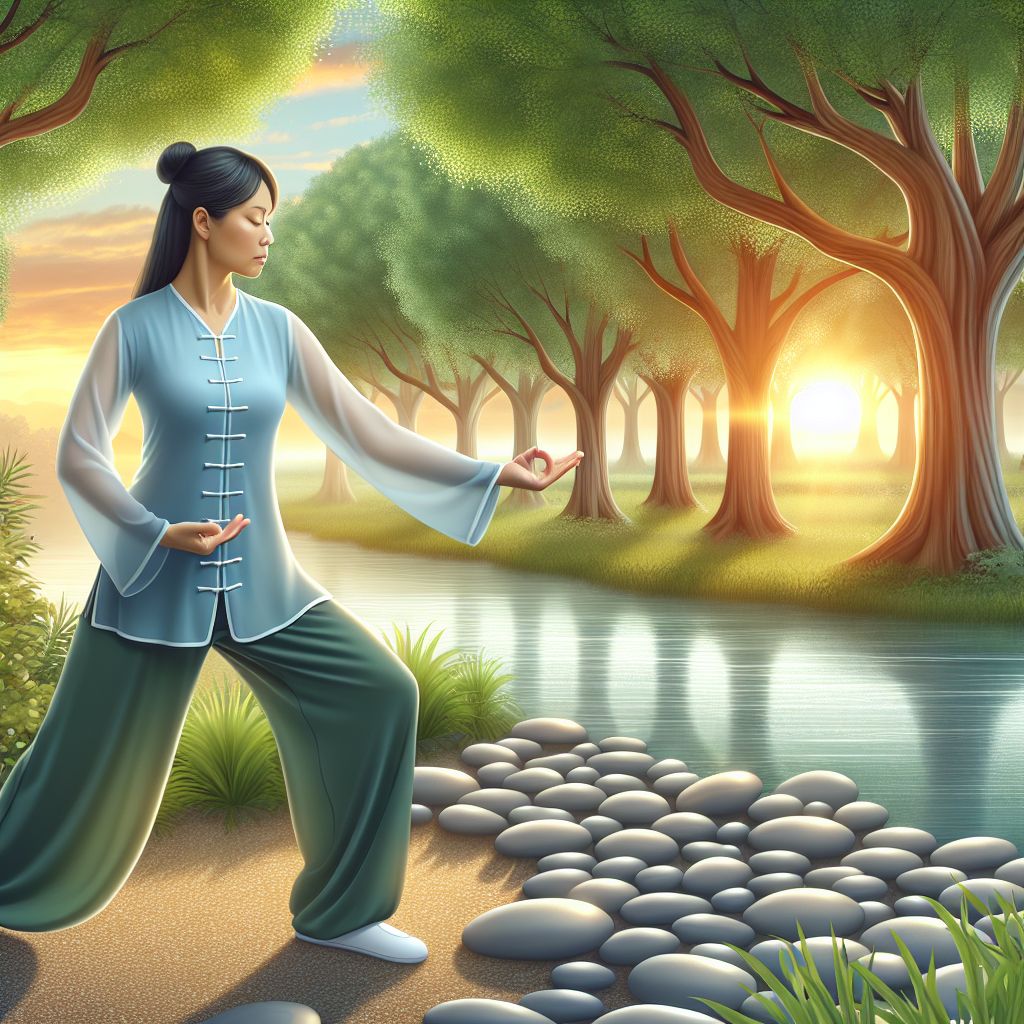
Chi Gong: An Ancient Practice for Modern Menopause
As we move through life, our bodies go through many changes. For women, one of these changes is menopause. This can be a difficult time with many uncomfortable symptoms. However, nature has provided us with a powerful tool to help us through this time. This tool is Chi Gong. This is an ancient practice that has its roots in Chinese medicine. It is a natural remedy that has stood the test of time. It has helped countless people maintain balance in their bodies and minds.
What is Chi Gong?
Chi Gong is a series of movements that are as fluid as a gentle stream. It combines breath, body, and mind in a seamless dance. This ancient system of coordinated body-posture, movement, breathing, and meditation is used for health, spirituality, and martial arts training. Chi Gong has its roots in Chinese medicine, philosophy, and martial arts. It is a practice that involves rhythmic breathing coordinated with slow, flowing movement and a calm mindful state.
Getting to Know the Sympathetic and Parasympathetic Systems
Before we dive into how Chi Gong can be beneficial during menopause, I would like you to understand two crucial systems in our body: the sympathetic and parasympathetic nervous systems. These systems are part of the autonomic nervous system, which is responsible for controlling bodily functions that we don’t consciously direct, such as breathing and our heartbeat. The sympathetic system is akin to the body’s accelerator, triggering the ‘fight or flight’ response, while the parasympathetic is more like the brake, encouraging the ‘rest and digest’ mode. Menopause can disrupt these systems, but Chi Gong can help bring them back into balance.
Chi Gong’s Influence on Autonomic Regulation: The Art of Balance
Chi Gong’s combination of movement and breathing exercises can help to regulate the sympathetic and parasympathetic systems, fostering a sense of calm and relaxation. The goal is striking a balance and letting the body’s natural healing capabilities take over. This balance is especially important during menopause, a time when the body’s internal equilibrium can be put to the test.
Using Chi Gong Breathing Exercises to Alleviate Symptoms
We breathe every moment of every day, but we rarely think of it as a health tool. In Chi Gong, breath work is key. It’s a method for directing the body’s energy flow, calming the mind, and easing physical symptoms. During menopause and perimenopause, when symptoms like hot flashes and anxiety can appear without warning, having a breathing technique in your toolkit can make all the difference.
A basic breathing exercise is the Abdominal Breathing method. Here’s how to perform it:
-
Find a comfortable place to sit and make sure your back is straight.
-
Put one hand on your belly and the other on your chest.
-
Inhale deeply through your nose, letting your belly rise more than your chest.
-
Slowly exhale through your mouth, allowing your belly to fall.
-
Continue this process for 5-10 minutes, focusing on the rising and falling of your belly.
This exercise promotes deep, diaphragmatic breathing, which stimulates the parasympathetic nervous system, reducing stress and helping to control symptoms like sleep disturbances.
Make Chi Gong Part of Your Daily Routine for Lasting Results
Like any other exercise or meditation, the key to seeing results with Chi Gong is consistency. Even a short practice every day can make a big difference to your health and well-being. Start with just five minutes in the morning or evening, and increase the duration as you get used to it. Soon, it will be a natural part of your daily routine.
Keep in mind, Chi Gong isn’t just about physical movement. It’s about incorporating the focus of the present moment into everything you do. Whether you’re doing the dishes or taking a walk to the mailbox, you can practice Chi Gong by moving with purpose and concentrating on the Love of God flowing into you.
Real Life Examples: Women Who Achieved Balance Through Chi Gong
It’s easy to discuss the potential benefits of Chi Gong, but seeing it in action is a different story. I’ve seen this practice transform many of my patients. Let’s look at a few real-life examples:
Janet, a 52-year-old school teacher, started having severe hot flashes and night sweats as she entered menopause. She was frustrated with how it was affecting her daily life, so she started doing Chi Gong every day, a particular form of Christian Chi Gong that I have developed over the years. After three months, her hot flashes were less frequent and less severe. She also said she was sleeping better and had more energy during the day.
Take Maria, for instance, who at the age of 49, was dealing with mood fluctuations and feelings of anxiety. She discovered comfort in Chi Gong, especially in the meditation components of the exercise. As time passed, her family noticed that she seemed more relaxed, and Maria experienced a renewed sense of control over her feelings.
Individual Experiences: Pre- and Post-Chi Gong Symptoms
Every woman’s menopausal journey is different, and so are the advantages they discover in Chi Gong. Some see a decrease in physical symptoms, while others gain emotional and mental clarity through consistent practice. However, the unifying factor is the sense of empowerment that comes from naturally taking charge of their health.
The Importance of Regular Practice
Chi Gong isn’t a magic cure, but with dedication and regular practice, it can help rebalance your body’s energy whether you want to look at it from an eastern or western medicine perspective. Many women have reported a decrease in menopausal symptoms, and more importantly, an overall improvement in their well-being and quality of life.
Let’s take a look at Susan’s story:
55-year-old Susan was initially doubtful about Chi Gong as a treatment for menopause symptoms. But, after deciding to practice it for 10 minutes every day, she saw a considerable increase in her energy levels and a decrease in her hot flashes within six weeks. Now the usual method I teach is actually about a 30 minute commitment so that is the target you would eventually aim for. The focus is on meditating on the healing love of God and for most women, they do experience that while they are doing the meditative movements.
The Significance of a Wholistic Viewpoint on Menopausal Wellness
Chi Gong is not merely a series of workouts; it is a wholistic viewpoint on wellness. It involves examining the body as a single unit and comprehending how physical symptoms are frequently linked to our emotional condition. By tackling both, Chi Gong provides a complete method to handle the difficulties of menopause.
This also serves as a reminder that we have the power to impact our health and well-being. By engaging in practices like Chi Gong, we are not just passively dealing with the symptoms of menopause; we are actively participating in our journey towards wellness.
Arming Yourself with Information and Application
Information is power, particularly when it pertains to your wellbeing. Comprehending the alterations your body is experiencing during menopause can aid you in making educated choices about how to handle your symptoms.
When you educate yourself on Chi Gong and other natural remedies, you are making an important move towards self-empowerment. You are giving yourself the tools to succeed during this phase of your life.
Understanding the Changes That Occur During Menopause
The more you know about menopause, the better equipped you will be to manage its symptoms. Knowing that stress can trigger hot flashes, for example, may encourage you to use Chi Gong as a tool for stress reduction. And in fact that is that main reason I teach Chi Gong, as a general and very powerful stress reduction tool.
Similarly, realizing that your hormonal changes can influence your emotions can assist you in being kinder to yourself and seeking methods that encourage emotional stability.
Ultimately, the goal is to take responsibility for what is within your power for your health journey. With a practice such as Chi Gong, you have a natural, accessible, and potent method to not just cope with menopause, but to flourish during it.
Establishing Attainable Objectives for Menopause Treatment
When using Chi Gong to manage menopause symptoms, it is very helpful to establish attainable objectives. This is not about a quick solution; it is about gradual progress and long-term wellness. Begin with small, achievable goals, such as practicing Chi Gong. But don’t just settle for five minutes each day. Doing the entire sequence will be much more effective in reversing the chronic stress symptoms that magnify every negative part of menopause.
Main Points
-
Chi Gong is a gentle exercise that can help manage the symptoms of menopause by regulating the body’s energy flow. It is the most ancient form of eastern self healing practices.
-
By promoting balance between the sympathetic and parasympathetic systems, Chi Gong can help reduce stress, improve sleep, and stabilize mood swings.
-
Regular practice is important; even a few minutes of Chi Gong daily can contribute to long-term health and relief of symptoms but to be really effective the whole sequence is the goal and that’s closer to a 30 minute commitment.
-
Personal stories of women who have found relief through Chi Gong highlight the effectiveness of the practice and the power of a holistic approach to health.
-
Knowledge is power, and understanding the changes during menopause can help you tailor your Chi Gong practice to your personal needs.
Common Questions
When considering Chi Gong as a natural treatment for menopause, you may have several questions. Here are some common questions answered to help you better understand the practice:
-
Is it possible to avoid hormone replacement therapy with Chi Gong?
-
When can one expect to see results from Chi Gong?
-
Is Chi Gong safe for women experiencing severe symptoms of menopause?
-
Are there any age limitations for practicing Chi Gong?
-
Can Chi Gong assist with anxiety and depression related to menopause?
Is it possible to avoid hormone replacement therapy with Chi Gong?
While Chi Gong can be a beneficial addition to hormone replacement therapy (HRT), it should not be considered a replacement. Chi Gong can significantly decrease symptoms of menopause in some women, which may lessen the need for HRT.
How Soon Can I Expect to See Improvements from Practicing Chi Gong?
Everyone is different, so the time it takes to see improvements from Chi Gong can vary. Most people start to notice a difference in their symptoms within a few days, while for others, it may take a bit longer. The key is to be consistent with your practice. Over time, most people who practice Chi Gong regularly report a gradual improvement in their overall well-being.
Can Women with Intense Menopause Symptoms Safely Practice Chi Gong?
For women dealing with intense symptoms of menopause, Chi Gong is typically a safe practice. In fact there is no medical contraindication to doing some form of Chi Gong even if you have severe physical limitations.
Is Chi Gong Appropriate for All Ages?
Chi Gong is a versatile practice that can be adapted to any fitness level and is appropriate for all ages. Because it is so gentle, it is an especially good choice for women going through menopause and post-menopause.
Is Chi Gong Effective in Treating Anxiety and Depression Caused by Menopause?
Yes, Chi Gong can indeed help in handling anxiety and depression that come with menopause. In fact it is particularly useful for both anxiety and depression. And I have seen the Christian form Chi Gong that I teach help women quickly get in touch with a healing experience with God which magnifies the usual physical benefits. The meditative part of the practice, coupled with movement and breathwork, can encourage relaxation and clear thinking, thus supporting emotional stability.
Stanley Lang, M.D. has been in active medical practice since 1978. He has been a family physician during these years with detailed experience in all age groups including delivering babies for several years. He has been a pioneer in developing models of wholistic health care that bring health to the whole person. He has particularly focussed on reversing Chronic Stress effects on the body. He is the creator of the Shalom Method for Wholistic Health, and he has created several online programs that allow patients to naturally self manage their problems including “The Natural Lyme disease Treatment Program”, the “Menopause Balancing Program”, “The Happy Healthy Child” program plus many others including as mentioned here “Christian Chi Gong–A Path to Experiencing the Love of God”
Managing Menopause With Qigong
Research shows that women can successfully manage menopausal symptoms with mind-…
Menopause and Medical Qigong: A Second Spring
The Medical Qigong doctor’s treatment protocol will include individualized Medic…
Qigong for mental health and sleep quality in postmenopausal women
by M del Carmen Carcelén-Fraile · 2022 · Cited by 10 — Importantly, Qigong exerc..